


 Truly*Adventurous presents
Gabriel B. looked his buddies in the eyes. A strong, silent type, he tended to solve other people’s problems while neglecting his own. But his abashed look said: this time, I need help.
Acknowledging it was hard. Life beat him down, burnt him out. He just needed a break.
Was that too much to ask?

When your 9 to 5 warehouse job was really 7:30 to 8 and you had five young kids… to repeat, five… it really was too much to ask to have a break. It was all but forbidden, may as well have been a federal crime.
Gabriel never had a moment to himself, much less for himself. If he sat down in the living room to rest for a beat too long, Sofia’s death stare drilled into his skull. Dishes teetered over in the sink! Homework screamed for supervision! The bathroom sink gurgled ‘unclog me’! He couldn’t dare bring up the idea of having ‘Gabriel Time’ to Sofia. Ever.
So now he turned to his best pals, Jamie and Jerry. You could argue, over the course of what was to come, that they weren’t the sharpest knives in the drawer, but nobody could claim they weren’t loyal, and as determined as dogs with a bone. It started simply enough, like catastrophes do, with a question. Did they have any ideas?
Tuesday, October 1, 2013. 10:37pm (to be exact: 10:37 and 19 seconds). Sofia slept next to Gabriel. A sound startled her from her sleep. She looked over at her husband, who also stirred.
Gabriel assessed the noises. “Someone’s trying to open the door,” he whispered to her. “Stay here and don’t make any noise.”
Their five young children slept in a different room. Sofia remained stock still as she watched Gabriel, shirtless and in loose blue shorts, slink toward the front of the house. His bare arms showed off his dedication to family: they were tattooed with the names of their kids, Isabella, Francesca, Nicola, Nicholas, and Eloise.
The alarming sounds grew at the door.
Sofia could have jumped out of her skin. Heart pounding. She inched forward to keep an eye on her husband.
Bam. Clang. The front door shook and rattled.
Gabriel had a round face, medium height, and big build. He was husky. He threw all his weight against the door to try to hold it closed.
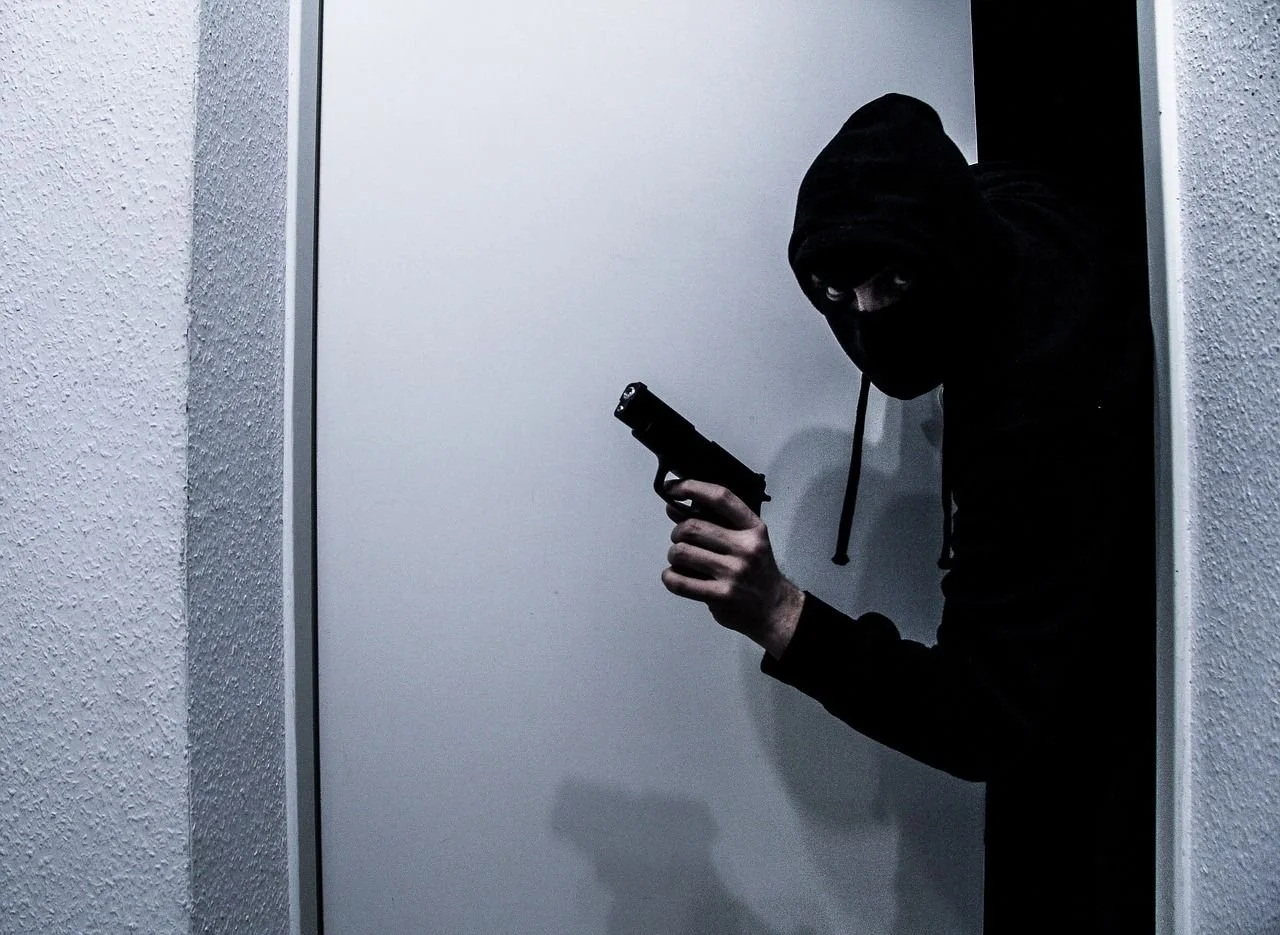
But the door continued to be rammed and battered. Sofia watched from the shadows as the door finally gave way. Two intruders burst inside, pushing Gabriel to his knees. One of the men was short and bulky. He wore a black mask, black shirt, denim shorts and white shoes. He put a gun to the back of Gabriel’s head. The other intruder was taller and slender, older, dressed in a green shirt, jeans, and black shoes. No mask, but the man shielded his face, as if realizing he’d forgotten or lost his face-covering along the way.
Still hiding herself, Sofia could only make out part of the tall man’s face. But if movies and books teach us anything, it is that a maskless criminal is the most dangerous one. If he thought Gabriel could identify him later and send him to prison, he would not let him live.
In a blur of sights and sounds, Sofia heard them ordering Gabriel to pay them. “Where’s the money?”
“Shut up!” the short one snarled. “You’re going to pay.”
Money! Why come here? Their household was filled with lots of things. Magna-tiles and noise and bills and activity and squabbles. But money?
“I have no money!” Gabriel cried. “Just don’t hurt my family!”
“Shut up!” the short one snarled. “You’re going to pay.”
The men pulled Gabriel to his feet and restrained his hands behind his back, frogmarching him out.
Sofia ran to the window. The men dragged the barefoot, bare-chested Gabriel to the back gate. With that, her husband of fourteen years vanished into the dark.
The bronapping of the century. They had done it. They had gotten Gabriel out of the house, and Sofia couldn’t blame him for it! She’d worry about him for a while, sure, and then, when he came back, she’d be so happy to see him, profoundly appreciative to have him back. It was a victory for overworked spouses everywhere. This was their storming of the Bastille. Their Independence Day.

The car flew down the dirt roads into the glorious night. They wouldn’t have forever. But the night was young. One night. That’s all their buddy needed to recharge his batteries!
Their brilliant plan worked. What now?
For starters, that brilliant plan might have overlooked one small thing. In between those two moments–Sofia worrying about him, and Sofia being so happy to see him again later–was it possible, just possible, she… might… call… the… police?
The second the kidnappers were out of sight, Sofia jabbed 9-1-1 into her phone.
Five minutes later, sirens blared, breaking the silent night. Hidalgo County deputies Howard R. and Mozes A. raced in their truck to a home on a remote route in the flat, rural area of the Rio Grande Valley. They rumbled up to the brown-trimmed house and met Sofia.

The story flooded out of her in desperate bursts between sobs.
“I don’t know why anyone would take him,” she said. What could they want from Gabriel? She went on about him: Straight arrow, never in trouble. Not involved with drugs or anything sketchy! The masked invader looked, maybe, late twenties, by how he moved. The other guy? Closer to forty.
The deputies herded her and the kids into the family minivan to shelter there for now.
Weapons drawn, the officers went room to room, looking for victims and suspects. “Clear!” one called. “Clear!” came the response.
They spread the alert on the sheriff department’s radio: home invasion, abduction, aggravated kidnapping. Codes like 1008, 207A, and 10-65 got tossed around and repeated.

Kidnapping. In front of the eyes of a shocked wife and children–actually, the children didn’t wake up during the course of the incident, but still, for all intents and purposes, in front of their eyes. It was brazen and remarkable.
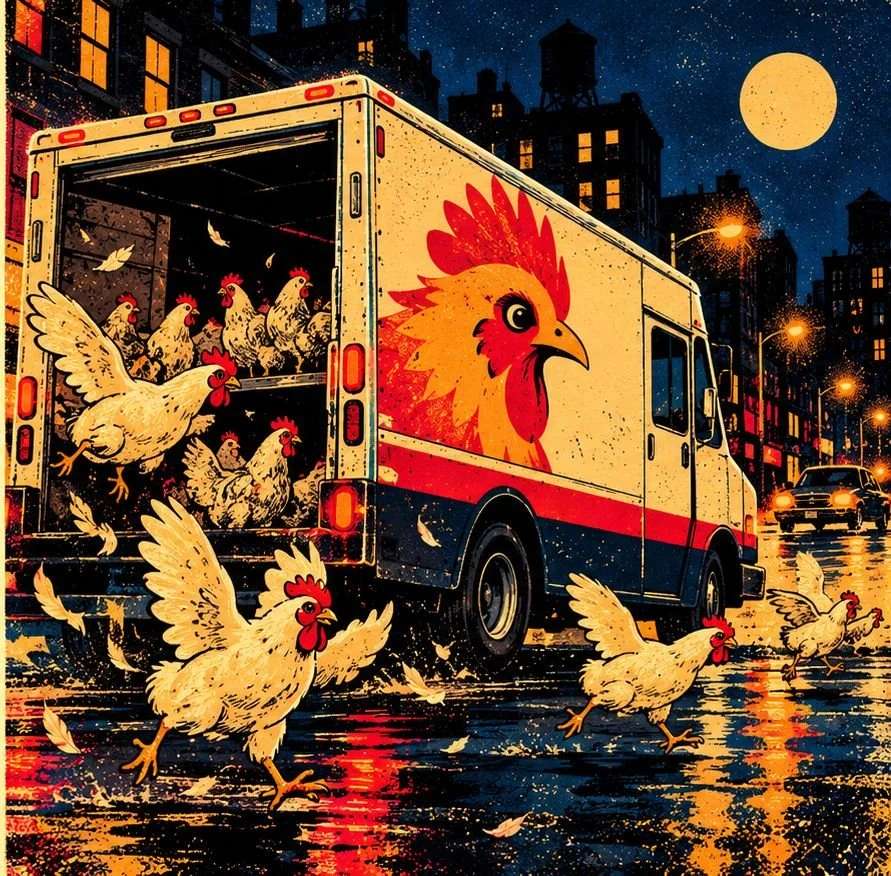
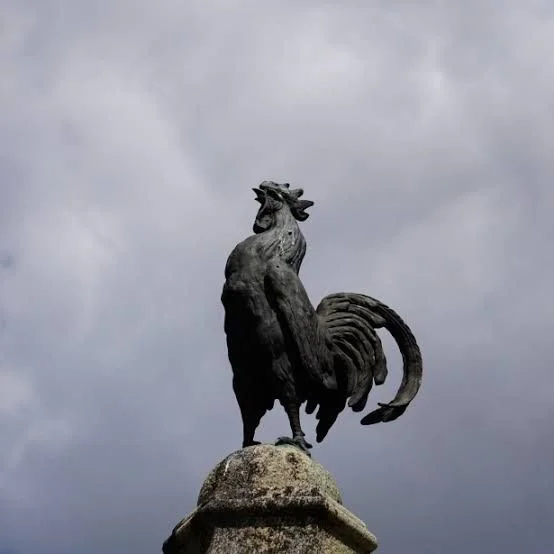
Not to say unheard of. There were kidnappings from time to time in the area, a mechanism of control and extortion by the drug lords who plagued the Texas border town. The usual culprit? The Rooster, aka El Gallo. Notorious, vicious, unrelenting. The Rooster’s symbol was a chicken, plastered on the trucks he used to secretly transport drugs. The chicken logo sounds lame. Soft pitching here, it probably should have been a rooster to match his nickname. Plus a rooster is tough, chicken is a word with a dictionary definition that means cowardly. Alternatively, the nickname could have been changed to The Chicken to match the logo, for continuity. But nevermind. Take it on faith, chicken logo or no chicken logo, The Rooster was a terrifying criminal kingpin. High on the list of public enemies for law enforcement on both sides of the border and beyond.
The entire sheriff’s department would have to jump into action. Led by Hidalgo’s big dog himself, Sheriff Trevino. Sixty-three, steely gaze, silver mustache, and the air of a competent old-world gunslinger.

The deputies briefed the sheriff what they learned about the missing man, Gabriel. He had no stash of money or valuables someone could be after. No involvement with known hoodlums. Nothing to do with drugs. No record, just like the hysterical wife claimed. The sheriff met the intel with his steely stare and old-world competence.
“He’s just a regular Joe,” Trevino said, processing. “No criminal history–anything. It’s just not right!”
Could it get worse? It could. Because the sheriff’s officers knew something Sofia and her family did not know, could not know. Trevino’s comment was spot on; the kidnapping made no sense. Unless…
The feds had been investigating whether someone in Hidalgo’s own sheriff’s department was accepting payoffs from The Rooster.
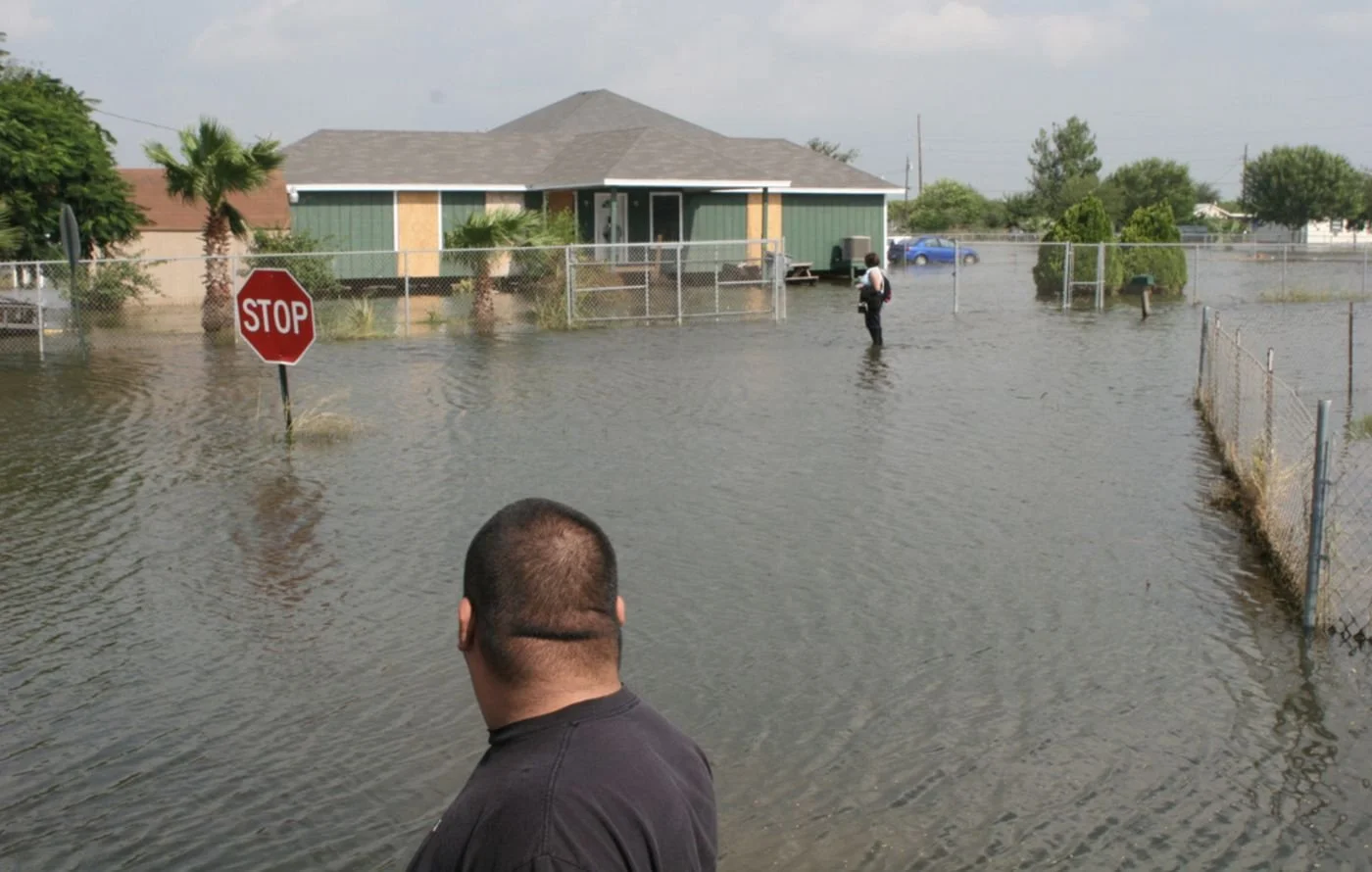
Hidalgo in 2013 experienced challenges and transitions. A long drought was banished by a welcome series of rainstorms tossed over from Hurricane Ingrid throughout the last month, which gave way to flooding. Their first Walmart was under construction, part of a bubbling-up of the legitimate economy that provided a counterpoint to the illicit drug war that spilled over the border. Some people were prospering, others were getting left behind and looking for other ways to fill their pockets.
On the one hand, the victim snatched from his house was nondescript and unremarkable. On the other, could that have been part of what led to the abduction? Could The Rooster have mixed Gabriel B. up with any number of other nondescript guys in the area who had, in fact, been involved with shady dealings, or had become informants, with the similar surnames like B., B., or B.? (Recall the omission of some names, but the point remains.) Could The Rooster have surmised that one of those men was the rat who shared rumors with the feds of a sheriff’s officer being on the take, bringing heat down on all Rooster-related things, and if so, now The Rooster could be out to shake down said rat–but had mixed up the informant’s identity, nabbing everyman Gabriel by mistake?
That would mean the kidnapping could indirectly be the fault of someone in their own department. Which would be… not good. It would be bad.
No time to dwell. A family man with five kids had just been torn from his home in the middle of the night. Hidalgo wasn’t just where they worked and lived. This was a tight-knit, multicultural, bilingual, proud town where good food and family meant everything. Nobody, not The Rooster or anyone else was going to violate that. The sheriff wasn’t the only gunslinger in this department. They were all cowboys now.
Back to Gabriel and his buddies and the obliviousness of freedom. After the flush of liberation, what do you do when facing the unfamiliar pressure of the world being your oyster? How do you take full advantage? What is the Picasso of a night on the town? What qualifies for Gabriel Bueller’s Day Night Off? The Hamlet of respites?
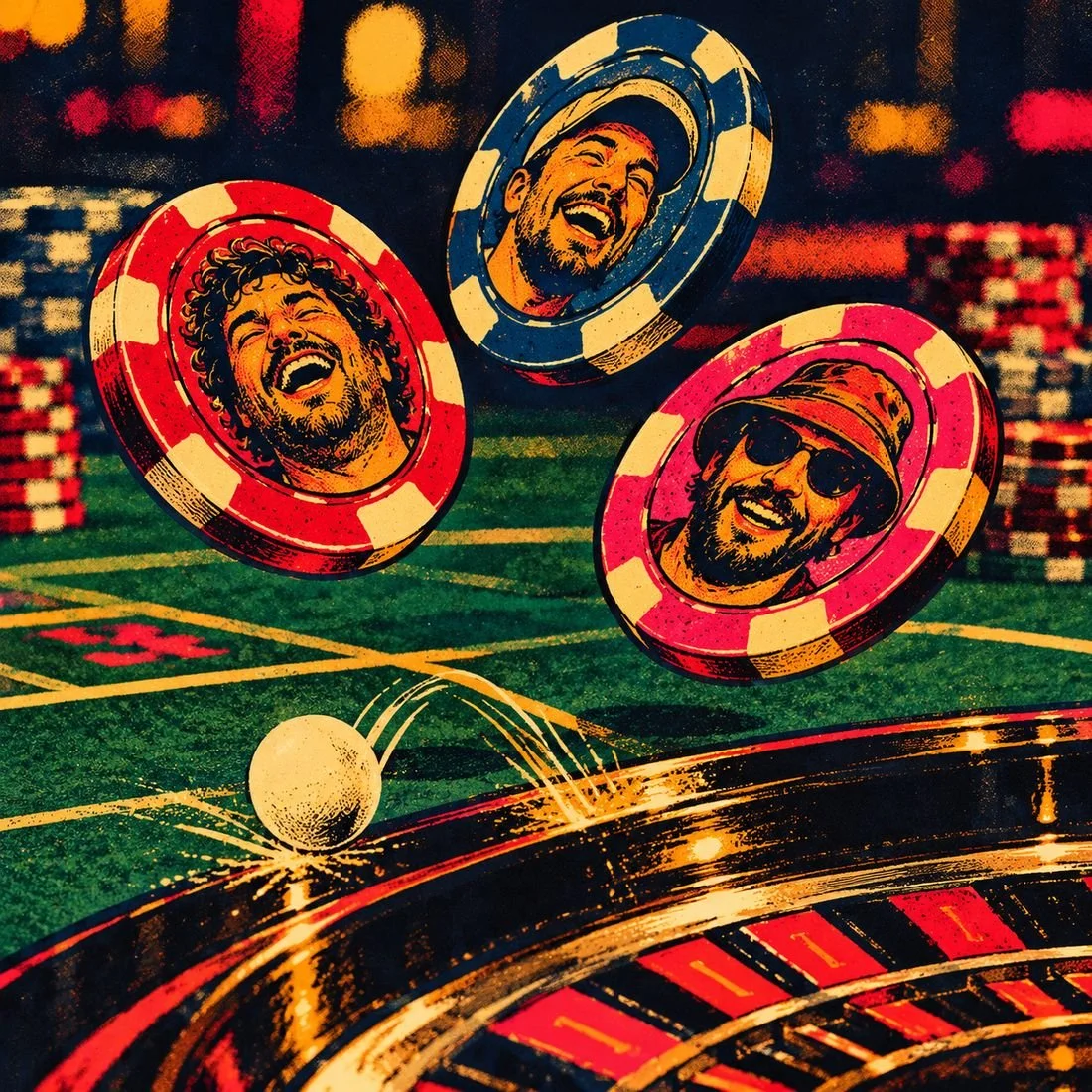
So little time, so many scenarios. Before spinning the roulette wheel of possibilities to see where the pill (the little white ball) lands for Gabriel, Jamie, and Jerry, let’s pick a scenario to bet on, polymarket style. Prediction markets, so they say, prove far more accurate than other means of forecasting, because the human mind has a hidden capacity to subconsciously place ourselves in someone else’s situation, a sharper reflection of reality than statistics and formulas. Let’s see how we do.
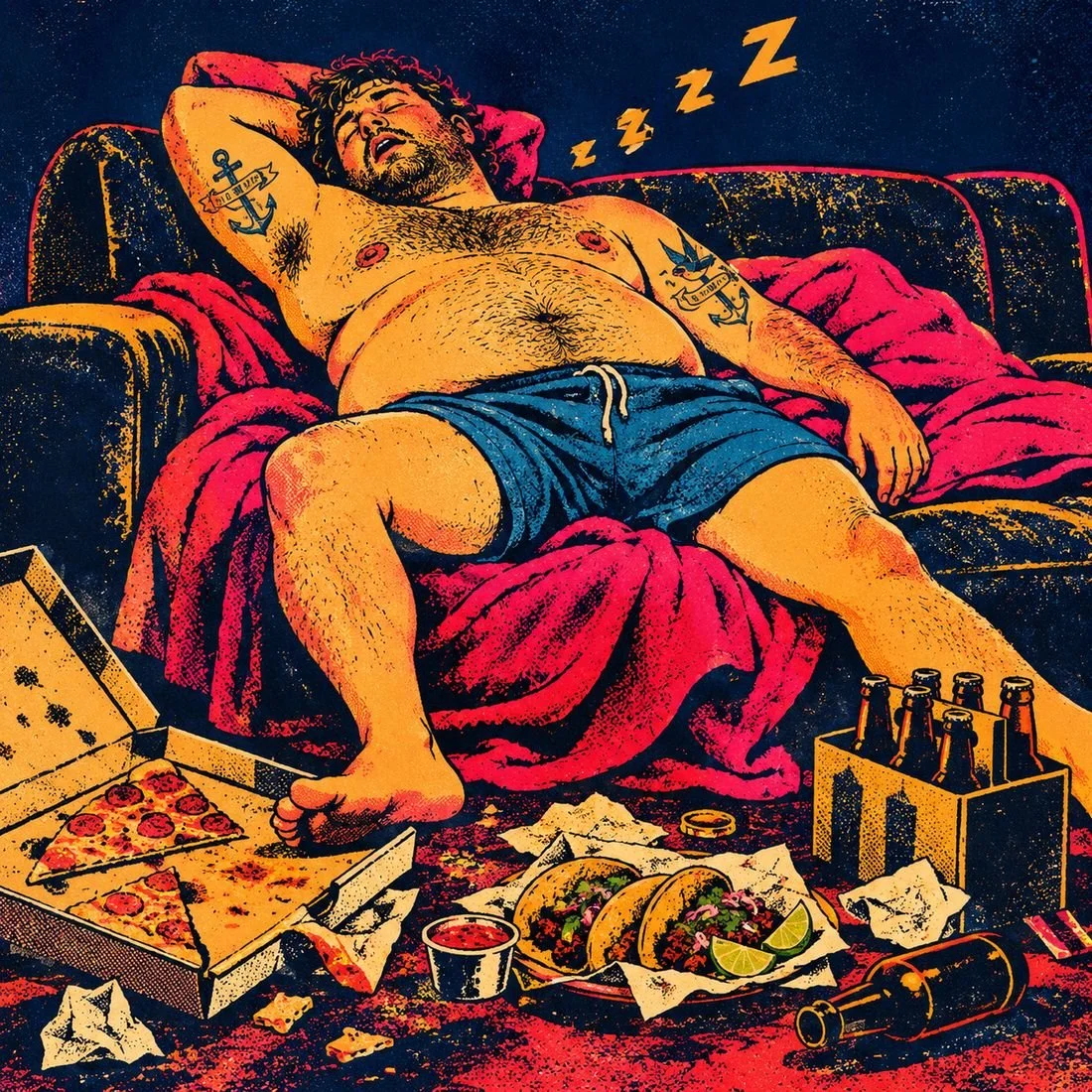
SCENARIO #1
ELEVEN
LOST HOURS
The tamest scenario. Father of five. Four girls, one boy. If you have no children, one child, even four children, it is really, really hard to relate to being a parent of five. Never a moment to yourself. Meals aren’t what you want, they’re not even just what everyone else wants–more likely, they’re the leftovers of what everyone else didn’t want. You don’t crave a raked-over bowl of Kraft Mac & Cheese, the kind where you add milk to powder to give a cheesy semblance because three of the five kids whine that the deluxe sku with real cheese is too creamy? Too bad. Want a good night’s sleep? You’re kidding. Girl #4 wakes up sobbing with a nightmare. The cat is meowing to go out; the cat is screeching to come in, with a bird corpse at her feet. Your wife is yanking the comforter away in her sleep inch by inch until you use the end of the pillowcase to cover part of your body.

Gabriel’s big night off? How about his big night in. Try this: Order what you want to eat. The best pizza in town, the kind the kids won’t touch because they say there’s green dots in the sauce. Also, birria tacos from the choicest birria food truck.
Gabriel dreamed of having dreams at night.
Six-pack of beers with it, clicking cans with Jerry and Jamie. No little ones bickering. Nobody spilling milk and saucy foods that need to be cleaned before they stain. No tantrums over being asked to eat. Just relishing the grub and the banter like a real adult, like in pre-kid days.
Then sleep all the way through the night, blanket all to yourself on Jerry’s pull-out. A solid, glorious, life-altering ten hours of shuteye so good you even get to dream. Think the first scenario sounds uneventful? Gabriel dreamed of having dreams at night.
Scenario #1 takers, place your bet while we check in on our law enforcement friends. They’re pretty busy.
“All-out manhunt!” Sheriff Trevino declared, and that’s what the old gunslinger got. Hidalgo County Sheriff’s Office owned this night. Patrol cars peeled out searching the area. Deputies zoomed up and down Mile 21 North looking for suspicious cars.
Sergeant Mike G. put the BOLO out. Be on the lookout for victim of abduction… male, thirty-four years old… arms tattooed with children’s names… scar on back… He rattled off the little they had on the two captors. Suspect One, five-foot-two, black mask… Suspect two, five-foot-ten, black sneakers… All units…
Sheriff Trevino checked in on different command posts. The lawman also never stopped being a politician, shaking hands, and repeating, “May God bless and thank you,” as he went from one person to the next.
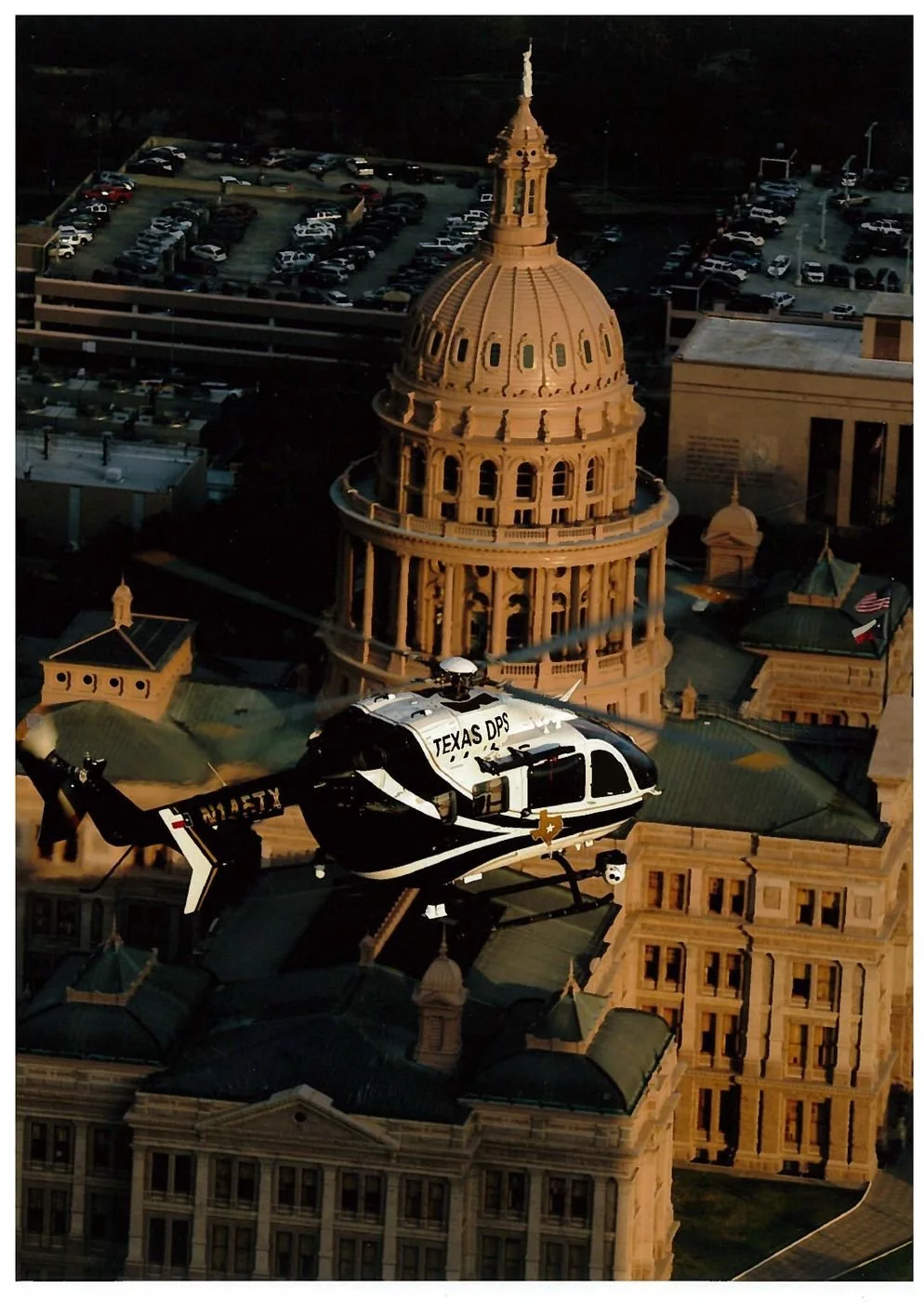
Then the ground shook and voices were drowned out by a mighty whup-whup. The helicopter from the Texas Department of Public Safety had arrived to be their eye in the sky. Cling to those big-brimmed sheriff hats so they don’t fly off. The chopper circled while the deputies in cars, trucks, and on foot set up the search perimeter where no one would get in or out.
Still waiting to pick a horse in the race? No problem. Think of what an overworked, overwhelmed five-time dad doesn’t ever get to do:

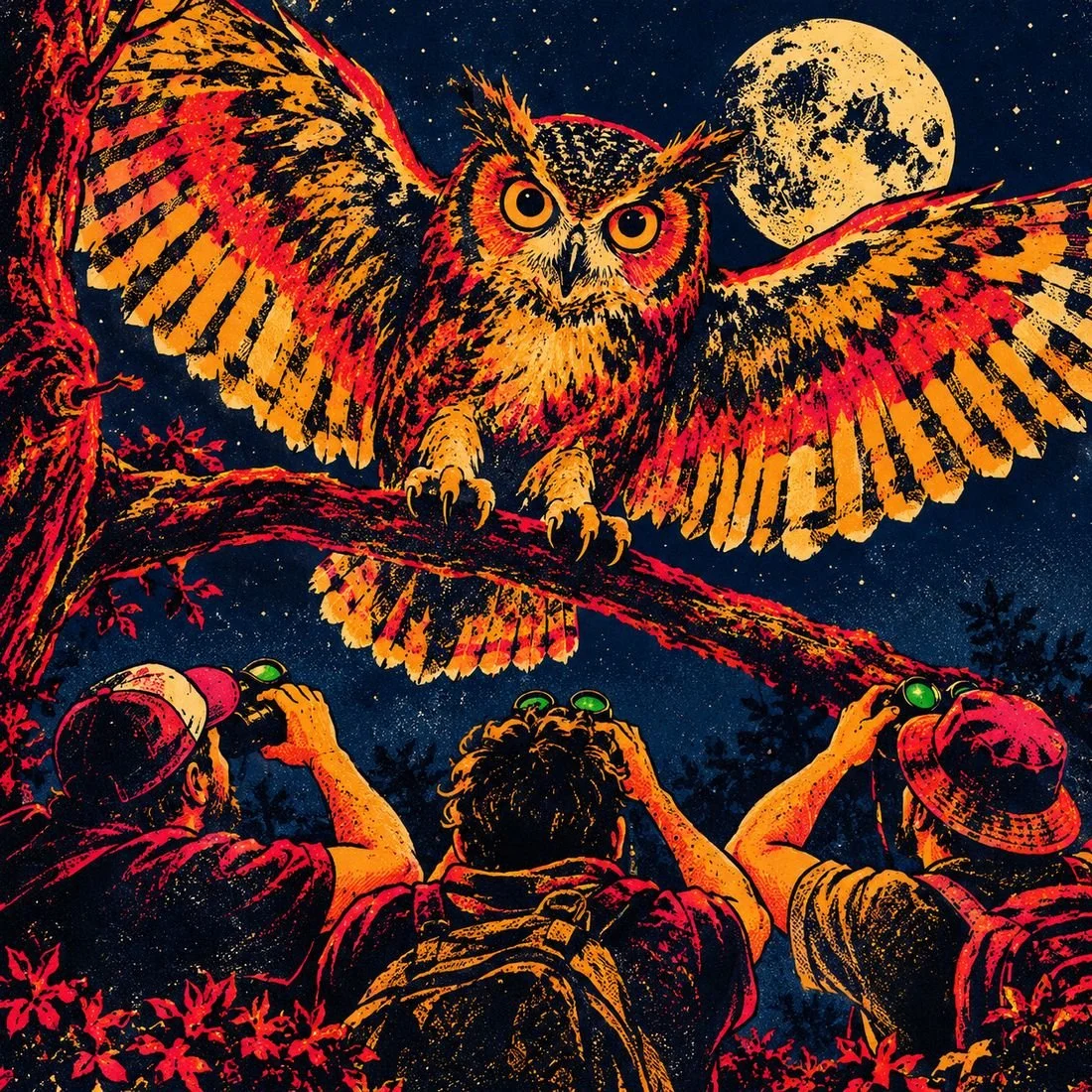
SCENARIO #2
ELEVEN
LOST HOURS
Birding.
Gabriel had always wanted to do nighttime birdwatching on the beautiful seven-mile trail of the Bentsen Rio Grande Valley State Park, without his wife beaming out her death-ray stare, or the kids calling him boring, or his macho friend group thinking less of him.
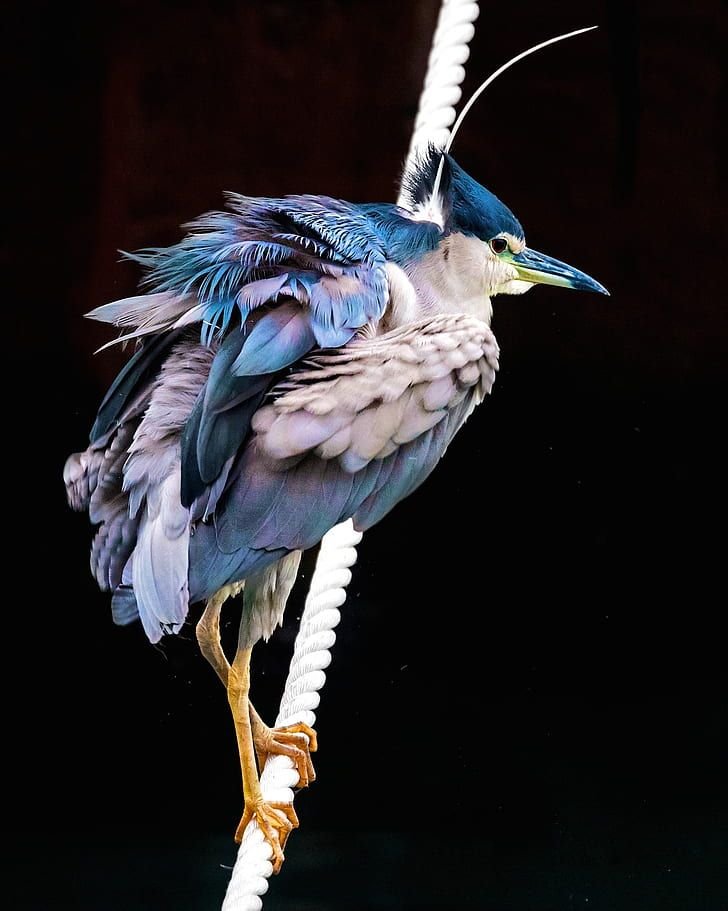
He had confessed the aspiration to his buddies, and truth was, his love of birding had infected them over time as he pointed out this kind of birdsong and that kind of nest. Night birding is a special type of birding, listening for nocturnal calls, using special night vision equipment, observing owls when you can really see them (literally) spread their wings in once in a lifetime moments. After their birding, Jamie used a connect to get them access to the Old Hidalgo Pumphouse Museum. That local institution celebrates the industrial history of irrigation in the valley, in which the three friends shared a quiet passion. There’s something about having a museum to yourself, the tranquil immersion, the sound of your own footsteps like they’re walking toward you straight out of history, and all of it is yours.
Investigators swarmed Gabriel and Sofia’s residence to look over every inch. No visible damage to the fence. A small opening in the fencing led to a canal–but no traces there of anything–weapons or people–being taken to water or dropped into it.
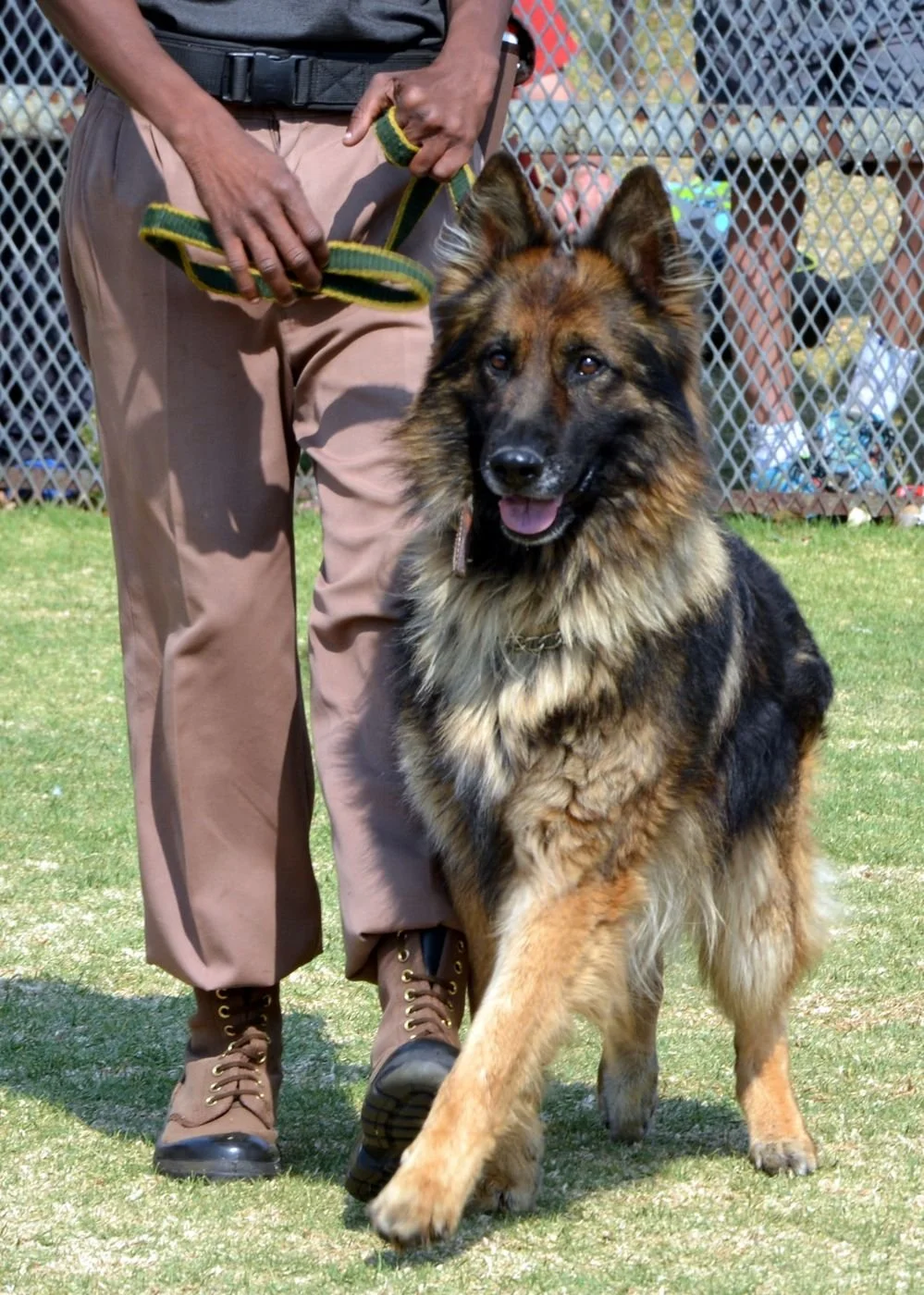
A new sound on the scene: the determined patter of paws. Officers of the K-9 unit pulled up. In the last couple years, Hidalgo’s K-9 unit pooches had disrupted drug trafficking, discovered cocaine and meth hidden in vehicle panels at the border, and traced fugitives across acres of farms. Now, unperturbed and undistracted by the chaos all around, the police dog was given belongings from the missing victim. The canine picked up his scent, and the officer followed his charge eastbound on the canal bank… but then, the scent was lost. Every direction seemed to lead to square one.
The sheriff did his rounds, gathering information and thanking everyone working the case. “May God bless and thank you. May God bless you and thank you.”
Ransom demands? the sheriff asked for a report. “Nothing,” was the answer. What the hell do the mystery perps want with this guy?
Even if The Rooster was involved, they couldn’t just barge through the gate of his estate–which was decorated with a rooster statue on either side. The mansion was hard to miss. First of all, there was a giant outdoor stone staircase that went from the start of the driveway to the second floor. That might sound like it makes no sense because it doesn’t, just look at this photo. But that was the point. The Rooster had demanded it be built that way, so it was built that way.

“You fix this mess, ese, or you’ll be answering for yourself at Sugarcane Road.”
Up there on the top floor of the 5,800 square foot palace, which looked out of place on a rural street with rundown trailer homes, The Rooster could survey his domain from his balcony, looking over his gigantic aviary, the largest (only) one in the neighborhood. Problems were brought to The Rooster all day long, but couched in the respect and reverence he expected for his position. Sure, sometimes a particularly green affiliate would get mixed up, asking for The Chicken, which would tickle The Rooster’s insecurities, and wouldn’t end well for the mixed-up party. The chicken was the logo, The Rooster was the man, was that so hard to keep straight? But business was business, and with the entire Hidalgo county sheriff’s office crawling over every inch of the region, The Rooster had to huddle with his lieutenants at his place on Sugarcane Road.
That was another thing: the monstrosity with the unsightly outdoor stairs sat on Sugarcane Road. The street name didn’t help The Rooster’s (literal) street cred among the local crews. “You fix this mess, ese, or you’ll be answering for yourself at Sugarcane Road,” risked eliciting chuckles. It could have been worse, if it had been Sugarcane Lane.
Whatever the felonious bigwig was planning, investigators would need to pick up some concrete evidence somewhere away from the estate to get their warrants.
If this kidnapping was a mistaken identity, could they put enough of the pieces together to reveal who The Rooster was utilizing to infiltrate the sheriff’s office, rescuing Gabriel while unwittingly exposing a way to bring down the region’s kingpin and accidentally saving an embattled sheriff’s office?
The next scenario poses the age-old question, what is the most epic partying that could happen in Hidalgo, Texas? Don’t sleep on:
SCENARIO #3
ELEVEN
LOST HOURS
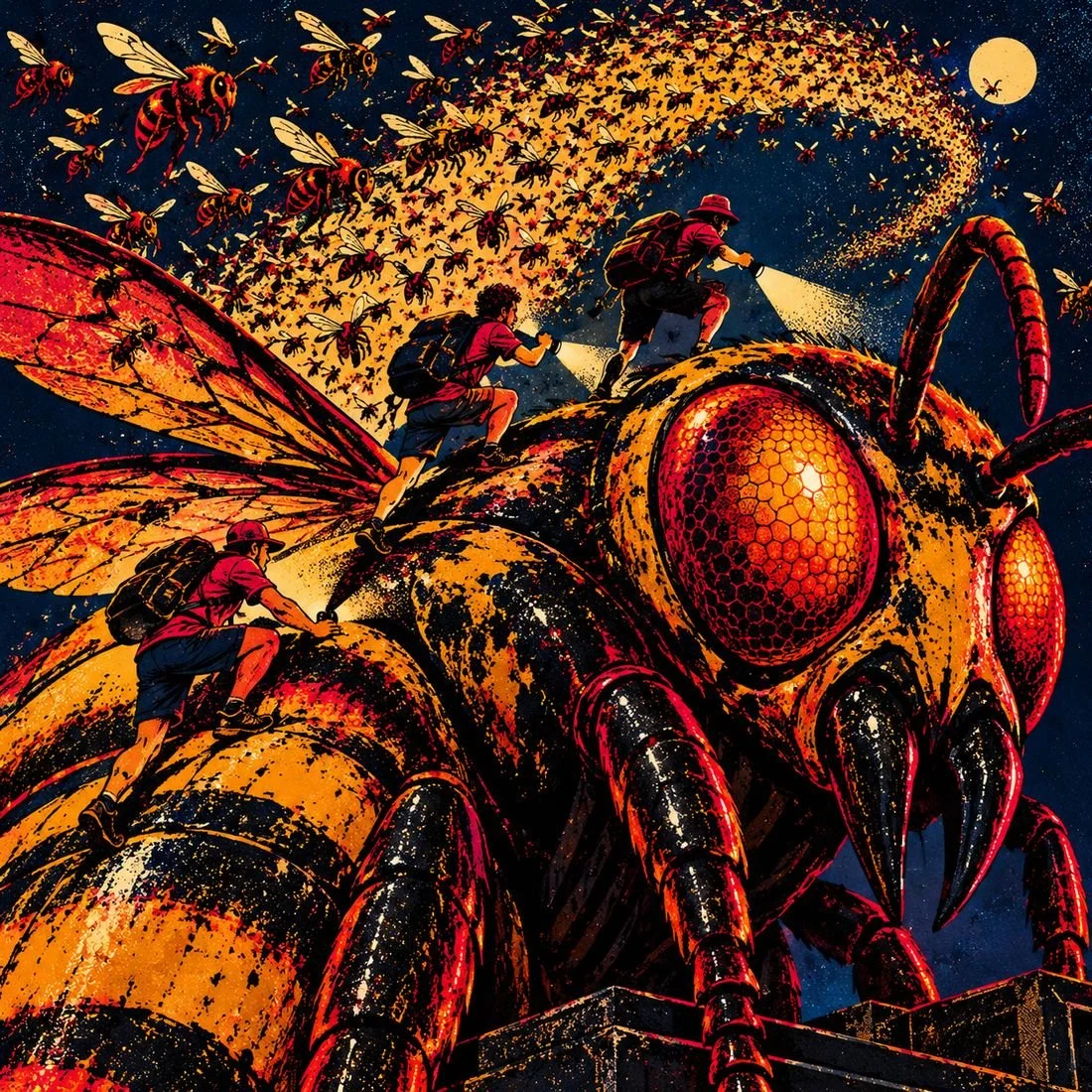
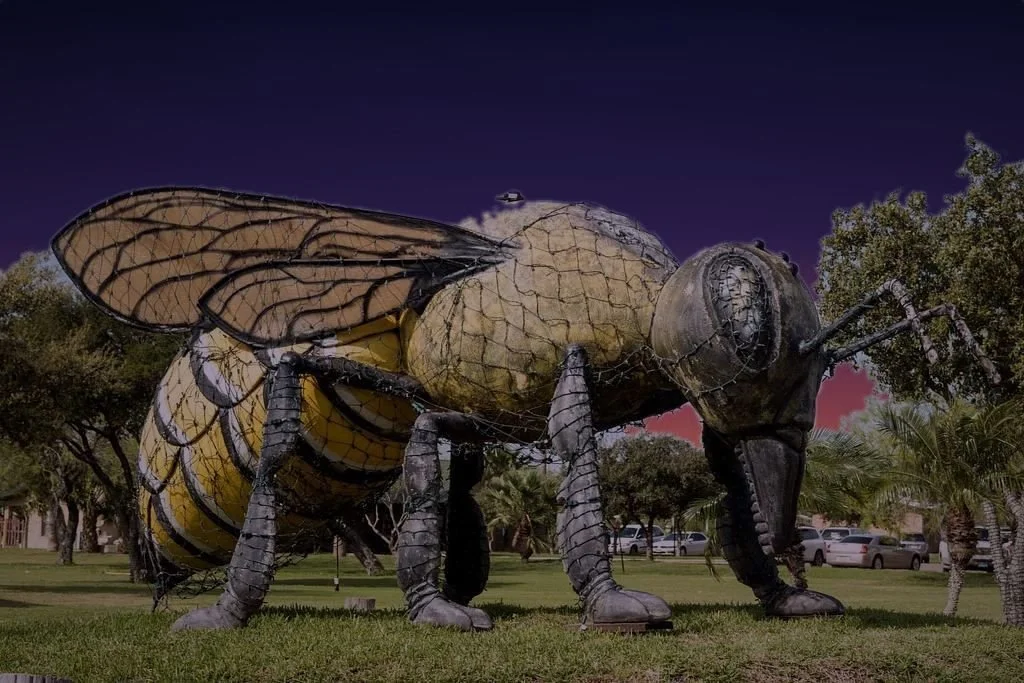
The world’s largest (only) killer bee statue stands at 10 feet tall and 20 feet long. Hidalgo’s pride and joy. It even gets wrapped in Christmas lights around the holidays. The monument exists due to the fact that Hidalgo is known as “the killer bee capital of the world,” the first place in the United States to have that insect. Gabriel had always said one day he’d climb to the top. It was, in a way, Hidalgo’s Matterhorn, and Gabriel’s Odyssey; it was the Odysshorn. Nighttime was the only time the men wouldn’t be caught, since the statue was in front of city hall.
Scenario #3 not wild enough yet to push our chips from #1 or #2? Needing a Fargo-makeover to this one, a Hangover-style infusion? Hidalgo takes a quirkiness backseat to no place.
How’s this?: the fellas didn’t know that an aspiring nature photographer had been intentionally attracting killer bees–using lemongrass oil–to that spot, liking the concept of snapping a pic of bees by the statue. (This photographer really, really wanted to get a credit in National Geographic.) Flashlights held by the guys for their big climb lit their way but, unfortunately, also riled up the bees, something flashlights will do. The hive swarmed the climbers. Recall that the statue was covered with the lemongrass oil.
So the guys were slipping and sliding all over the statue, and when they found the ground they ran, but the bees didn’t give up. That’s the thing with killer bees. They form massive funnels to chase their targets. Along the way, Gabriel banged up his leg. The absconders finally shook the bees, but ended up far from their car in the middle of a street party, which had also become the site of a quinceañera afterparty. Gabriel was still bare-chested, barefoot and, of course, had no cash in his sleep shorts. Jerry’s wallet had been lost in the bee chase, and Jamie had his wallet but no money and his credit card was suspended. They couldn’t safely call anyone, because of the whole covert bronapping thing. They needed a ride, and next thing they knew they befriended a pinata supplier from across the border who entrusted the lost men with one of his wares that he said could not be broken, under any circumstances, even though that was the purpose of pinatas.

The Epic Scenario included, not necessarily in order: one of them falling into a nearby river, the theft of a pontoon boat, a female lucha libre match, margaritas, escaped exotic birds, an ex-girlfriend appearing at the quinceañera, illegal fireworks smugglers, Gabriel ending up in someone’s cowboy boots, the three having to sneak into the Walmart construction site to leave a time capsule, and an apparent chase into the chocolate factory (yes, there is a real one in Hidalgo) by strangers who were after their pinata.
La Noche Épica
The night wore on without a trace of Missing Person #M751597703. The big guns arrived onto the scene, literally and figuratively: the CID, or Criminal Investigation Division. The best of the best in the state to tackle “threat to life” investigations. Investigator Ryan L. stepped out from the vehicle, surveying the scene, bracing for interagency squabbles. Every investigator has a case that changes everything for him. Could this be his?
(No, no it couldn’t. Because: bronapping. But the sleuths at CID didn’t know that.)
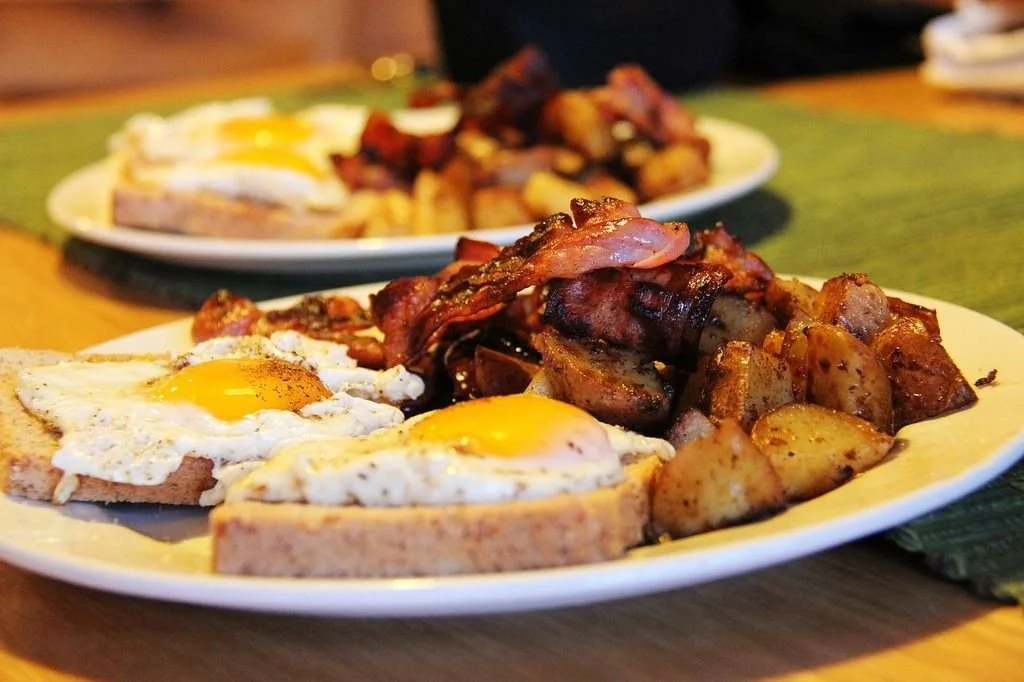
Sheriff Trevino’s dual activities as lawman and politico were second to none. He knew that the public often had the best information pertaining to the toughest cases, which also gave him an excuse to rub shoulders with constituents. “Coffee with the Sheriff” happened at one of the local diners where citizens could ask questions as the sheriff could get off his feet and dig into pork chop with eggs. Asked about the prospects of cases, or about how his religious faith affected his work, he’d always have an answer ready, sometimes the same answer: “I have faith in the truth and my capacity.” When the press showed up to the diner to scribble down his comments, the sheriff cheerfully invited them to accompany his department on some raids.
While the CID played Sherlock Holmes, plenty of doors awaited being busted down by the cowboys of the sheriff’s office to rile up The Rooster, even if they didn’t yet have what they needed to burst into Sugarcane Road itself. (“Sugarcane Road!” even the deputies had to titter.) There was no shortage of things that riled The Rooster. Case in point: that fall, Breaking Bad was at the height of its popularity as it rounded into the back half of its final season, and a mealy-mouthed character named Gus used a fast food chicken restaurant as a front. The Rooster could only stew in front of his 65 inch plasma screen TV on Sugarcane Road. Chicken-related drug fronts were The Rooster’s thing years before this AMC Original drama! Were these Hollywood phonies taunting him through the TV? He could have pulled out his .38 to shoot up the screen, if the thing didn’t retail at $3,500, plus a broken plasma screen could release noxious gases like xenon, which couldn’t be good for you.
Basic cable true crime series tell us the first 48 hours are the difference between life and death in a kidnapping. Patrols and perimeters escalated. Into the next day the sheriff’s officers and CID officers fanned out in every direction. The Rooster’s operations hunkered down. It was mid-morning on Wednesday when Investigator Ryan returned to comb the property around the crime scene again. A green car clattered up to the house. Unknown male, thirties, driving.
It was Gabriel B. at the wheel! Sofia, in tears, ran to him.
“They released me,” Gabriel said.
Ryan hated to break up the reunion, but they needed to debrief their subject at the station pronto.
Investigator Ryan escorted Gabriel to the sheriff’s office. Gabriel was taken into one of the interview rooms to collect his statement.
“They took me,” he said, “against my will.”
Questions about the suspects. More questions. It wasn’t long before Gabriel admitted: “They’re my friends.”
His friends? Why? A prank by pals? An initiation? A bet he lost to his bros? He owed them money or drugs?
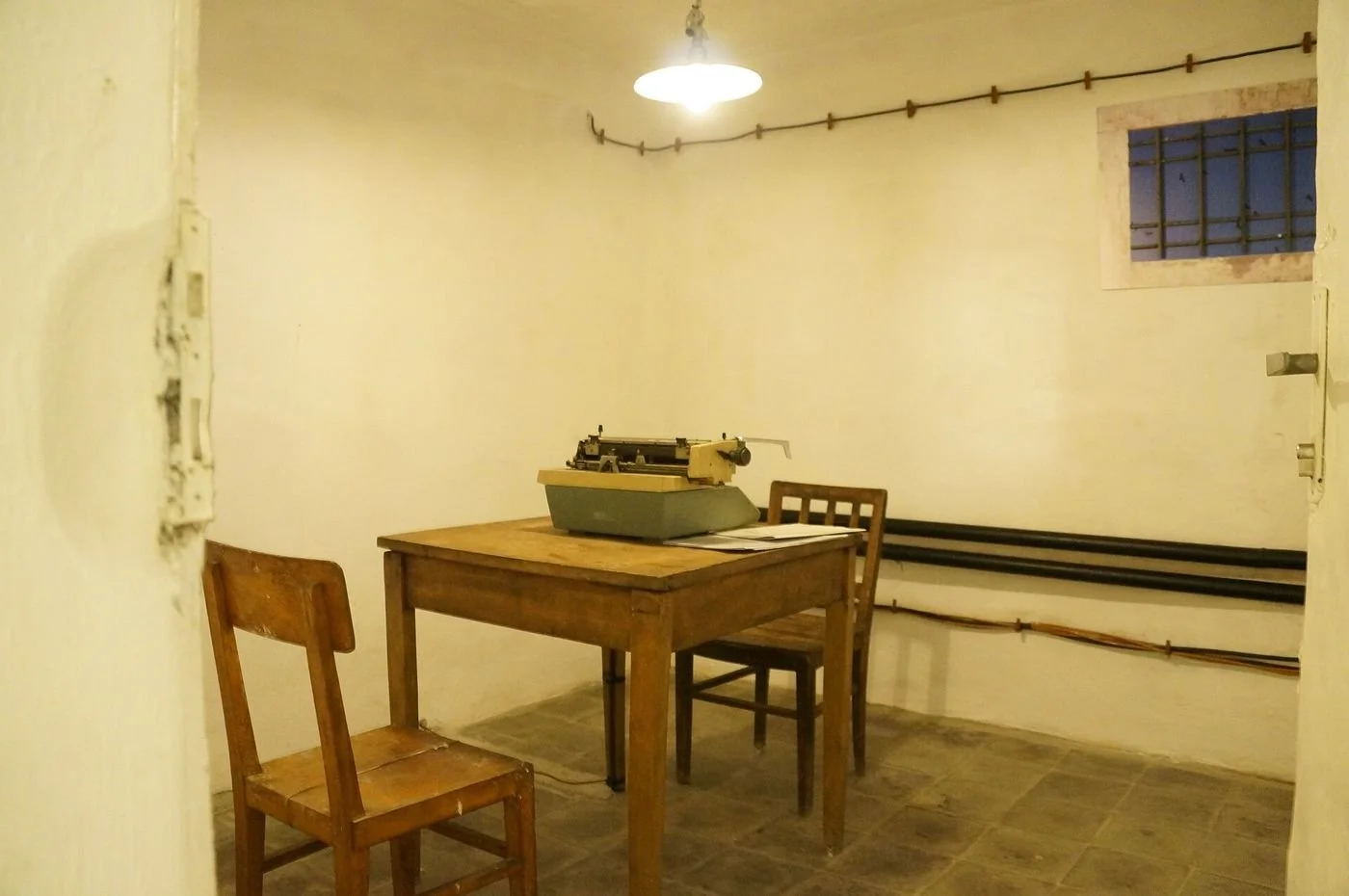
It was no kidnapping. It was something else. Brazen. Remarkable. Stupid as hell. Life changing.
Gabriel made his biggest admission yet: “I wanted to go out to party.”
He had planned it. He was the mastermind of his own bronapping. He had arranged with the brospects how and when it would go down.
It was no kidnapping. It was something else. Brazen. Remarkable. Stupid as hell. Life changing.
Oh, there had been people here and there in the annals of idiocy who showed up after a bender, or a tryst, and blurted out, “I was kidnapped!” to a spouse or boss or a tired detective as an excuse, but forget them. Nobody had really believed those amateurs.
This had been no afterthought, but rather a coup de grace. This had been a bronapping like none that had ever been attempted in recorded history. Complete with police chopper!
One question burned hottest. What exactly did they do that night? Scroll to your polymarket record. Scenario 1, 2, 3?
Gabriel wasn’t saying, and when the brospects were dragged in, they kept mum.
Here’s the first of two big twists to this epic: Gabriel, Jamie, and Jerry, to this day, have never revealed what they did.
Eleven hours. Eleven lost hours.
Before Edgar Allan Poe died, he disappeared for five days and when he was next seen, he blabbed some gibberish and lost consciousness. Nobody knows what happened in those lost days (one theory: kidnapping). Another case of a mystery writer living in a mystery, Agatha Christie vanished for eleven days, later claiming she had no memory of what happened. Leonardo DaVinci has twenty days of his life that are unaccounted for, after which he started to produce some of his most remarkable work.

When Gabriel B. masterminded his own bronapping, he probably did not have the time or inclination to recite the speech from Henry V to his bros. You know the one. Where Prince Hal inspires his ne'er-do-well friends to fight a battle at his side on St. Crispin’s day by convincing them they will always be remembered, even though they would probably die. If Gabriel had, he should have chosen this part:
HENRY V · ACT IV, SCENE III“This day is called the feast of Crispian:He that outlives this day, and comes safe home,Will stand a tip-toe when the day is named,And rouse him at the name of Crispian.He that shall live this day, and see old age,Will yearly on the vigil feast his neighbours,And say ‘To-morrow is Saint Crispian:’Then will he strip his sleeve and show his scars.And say ‘These wounds I had on Crispin’s day.’”
Except October 1, when Gabriel was bronapped, was three weeks early for St. Crispin’s day, and also nobody in Hidalgo knew what St. Crispin’s day was.
Inspiration forms a circle in the history of humanity. In addition to those icons with missing hours–Poe, Christie, Da Vinci–there were the people who simply vanished from the face of the earth and never came back. D. W. Cooper leaping out of the plane. Amelia Earhart vanishing into thin air in hers.
We scribble over the blank spaces depending on what narrative we want to fit into the blankness, inspired by our own beliefs, values and interests, and the meaning of our own lives and eras we try over a lifetime to articulate.
Eleven missing hours in Hidalgo, Texas.
“We have people file false reports. But I’ve never had someone do it just to get out of the house.”
Sheriff Trevino was stumped after he was briefed by his deputies and CID officers with the bronapping bombshell. “We have people file false reports,” he marveled. “But I’ve never had someone do it just to get out of the house.”
The investigators had all the brospects dead-to-rights, yet couldn’t finalize that most important answer, and its importance transcended this trio. The question represented a universal one. When you have one night to do anything, what do you do?
Mugshots were snapped. Gabriel stood before the court. The charge was read. False report to the police. Class B misdemeanor. Bond: $5,000. He pleaded guilty.
More charges could be brewing for Gabriel. Obstruction of justice. Fraud. Conspiracy. Evidence tampering. Even the feds could step in once they got up to speed.

Gabriel better take a big breath, the sheriff made clear, because they could be throwing the book at him, dropping the hammer. And the sheriff relished every minute. That guy had needed time to himself? Did that fool really think that excuse protected him from the full force of the law?
“He’s going to party in jail now,” Sheriff Trevino sniffed to the press. “He’s going to have a lot of answering to do.”
The sheriff, with his old-world bluntness, used the word “dumb” a lot when speaking about Gabriel.
After months of getting their ducks in a row, a consortium of law enforcement agencies prepared to deliver a dramatic message. “No one is above the law,” said the US Attorney of the Southern District of Texas. He was working in conjunction with Homeland Security, the Drug Enforcement Agency, the IRS, and the Texas Department of Public Safety’s elite Rangers Division.
They flew into action. With a laundry list of charges, they made their arrest.
The target: Sheriff Trevino of Hidalgo County, Texas.
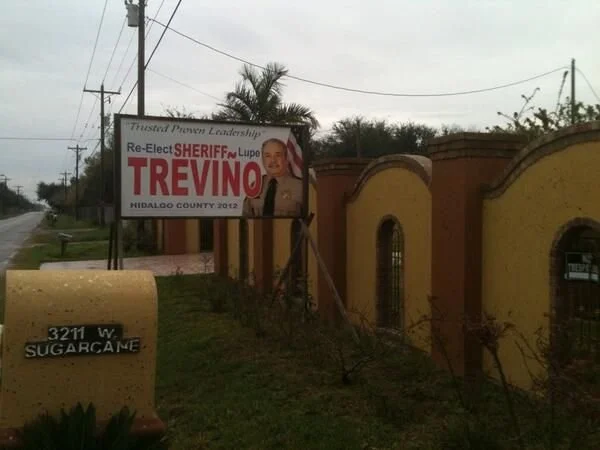
Sheriff Trevino had been taking bribes from The Rooster to tip him off about law enforcement activities around Hidalgo against the chicken logo branded trucks that transported drugs, and the rest of his operation. Conspirators who helped Trevino were also charged, as was The Rooster himself. In retrospect, the “Re-elect Sheriff Trevino” signs on The Rooster’s front yard, not far from the rooster statues, had probably been a red flag.
The ex-sheriff was sentenced to five years in federal prison. When the sheriff turned in his badge, he released a statement closing with: “God Bless and thank you.” The Rooster got hit with ten years, with consideration for the fact that he ended up testifying against the sheriff.
Gabriel began his monthlong prison sentence.
The case was technically closed. But the sheriff’s office was shaken up and would never be the same. In the second big twist, their leader had turned out to be their enemy.
Maybe it stung all the more not to have solved that mystery at the center of the bronapping, a chance to prove that they could still get to the bottom of unanswered questions.
Questions like: Were the brospects the worst friends you could have, or the best?
But as the investigators’ lives moved on, with new cases piling up on their desks, that all-consuming enigma floated around them. Haunted them, like the weary detectives in old-age makeup and bad haircuts in True Detective revisiting the hardest case of their careers.
What was worth turning the world upside down? There were so many possibilities, this became Hidalgo’s Canterbury Tales and Rashomon and Decameron combined into one, where truth became a matter of perspective and storytelling.
Rumors and clues percolated. Mythmakers stepped into a void. Was it a fact that the attention on Hidalgo from the bronapping put extra spotlights on those kidnappings The Rooster really had pulled off, and in doing so, turned up the heat from the feds that contributed to bringing down the drug lord and his partner-in-crime, the sheriff? Was it true the three pals got a hold of a pinata that held inside its paper-mache belly the key to The Rooster’s crimes, and through the trio’s royal screw ups the party favor fell into the hands of The Rooster’s rivals?
Which of all the scenarios being floated by investigators and the rumor mill came closest?
The questions spread to every investigator who heard about the case, possessing them, like a virus in a horror movie.
For the investigators who had been front and center–Howard R. and Mozes A. and Ryan L.–the secrets increasingly seemed to be just about to reveal themselves, waiting there the whole time, like Kaiser Sosie dropping his limp in Usual Suspects.
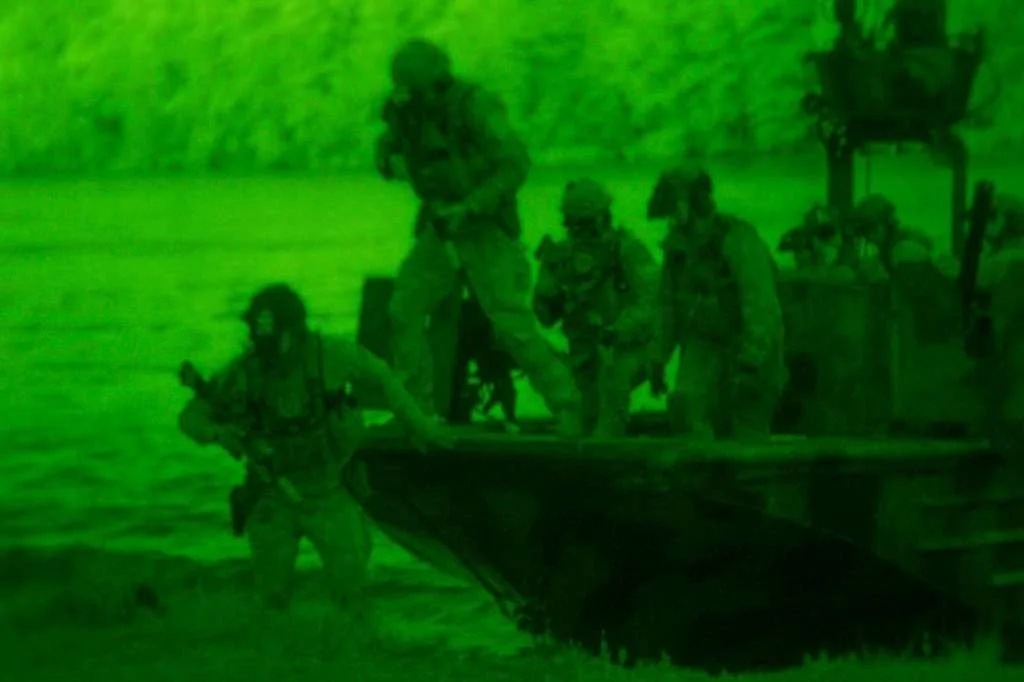
Maybe the kidnapping was a reason in itself, a way of feeling alive and capable, as if they were briefly Seal Team Six, in a life filled with mundane responsibilities, routines and repetition. The escape was the escape. Maybe the rest of the time was spent in a celebration that it had worked, that they set out to do something extraordinary and did it. Couldn’t adrenaline-fueled police officers, maybe more than anyone, relate to being driven to that point? Police constantly wonder if they work to live, or their work is their life.
Could the brospects’ bronapping have been so dumb it was brilliant? So idiotic as to be a masterstroke?
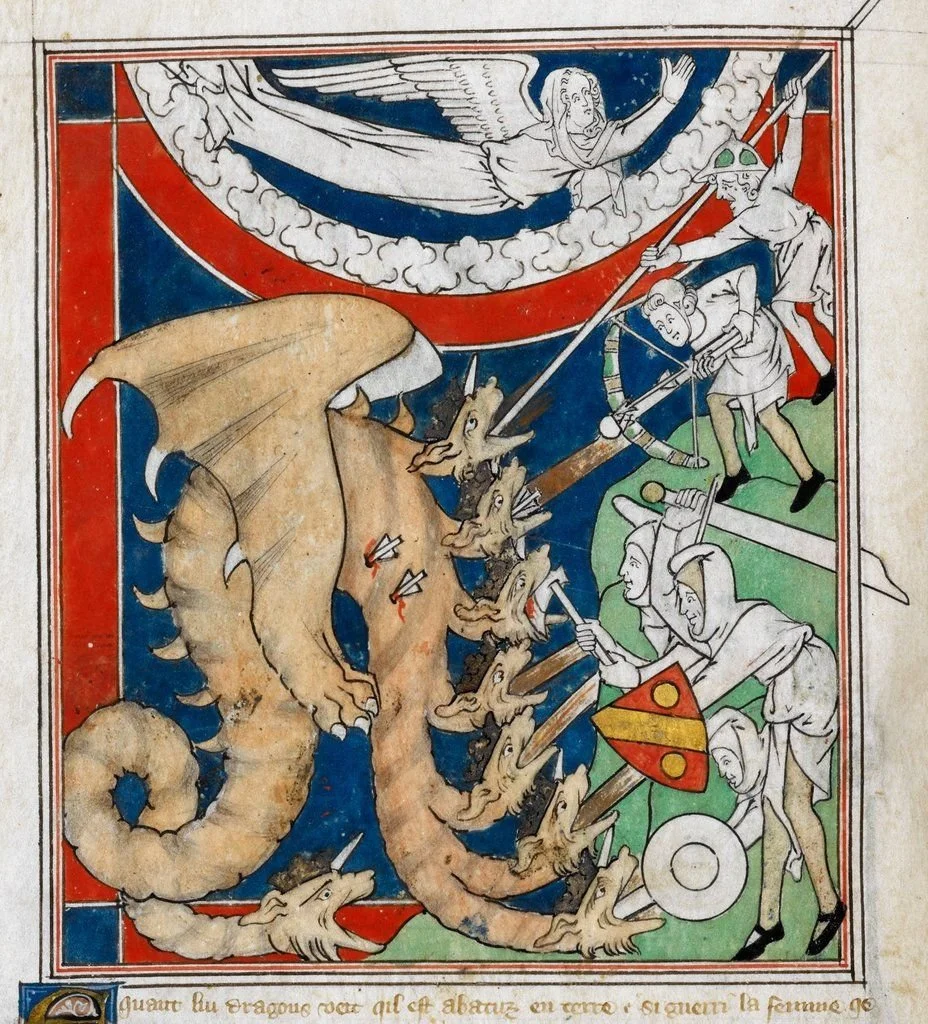
Maybe the kidnapping was like those old tapestries in medieval churches, where a knight slaying a dragon was just allegory, with the dragon really the landowning class or the plague. They weren’t really holding a gun to Gabriel’s head in the bronapping but holding it to the head of conformity and low expectations, to neverending thankless obligations, to the loneliness epidemics and emotion deserts talked about when it came to modern man that kept so many friends from showing up for each other.
Maybe it made perfect sense that the brospects kept the answers to themselves. Gabriel had to protect his friends, who, it could be argued, did not technically do anything illegal. But also: this was theirs. That night belonged to them. It was theirs alone, nobody else’s, and would stay that way.
Like Dr. Strange stepping through the folds of a multiverse into another dimension–in which he was his own priority–and then stepping back into his regular life, where everything was still what it was.
Very few things were really Gabriel’s. His time. His space. Sure, his bronapping was really, really stupid. But couldn’t something be stupid and still make you, if not a better person, a more whole one?
Even ex-Sheriff Trevino, whose future became an abyss of imprisonment and disgrace, wondered how Gabriel could return to his normal life. “Now you got to go home and explain it to your wife,” Trevino pondered. “It’s probably going to cost him.”
But the fallen sheriff could relate to Gabriel more than he acknowledged. The lawman crossed lines and arguably sold his soul to be unfettered and free from restrictions, from the laws he swore to uphold. Gabriel may have faked a crime for a taste of freedom, but the sheriff had faked law enforcement for power.
Local, then national, then international press lapped up Gabriel’s story, practically laughing out loud at him. They mocked the fact that he was too scared to tell his wife he wanted to go out for a night. Were the mockers ever married? Of course he was more scared of his wife than whatever else you threw at him–sheriffs, SWAT, K-9 patrol, CID, choppers! He was scared of what so many of us fear–disappointing the people we love by admitting we need something we don’t know if we deserve.
The press covered Gabriel’s prison sentence with gusto, but they were nowhere to be seen when Gabriel got early release after nineteen days.
No one had come to observe that day, when guards retrieved Gabriel. Walking him past the other cells. Nobody thought to document the admiration reflected in the eyes of other prisoners who, at one time or another, felt trapped in their own lives before being behind actual steel bars. Not arguing that Gabriel’s prison walk belongs in the pantheon of endings like Dead Poets’ Society (“Oh Captain, My Captain!”) or Spartacus (“I am Spartacus!”), where the outcast becomes the person of the hour, the inspiration for future generations.
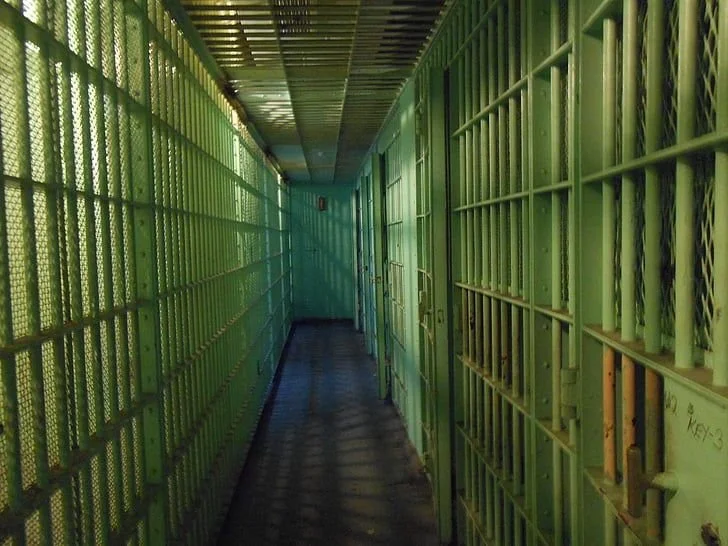
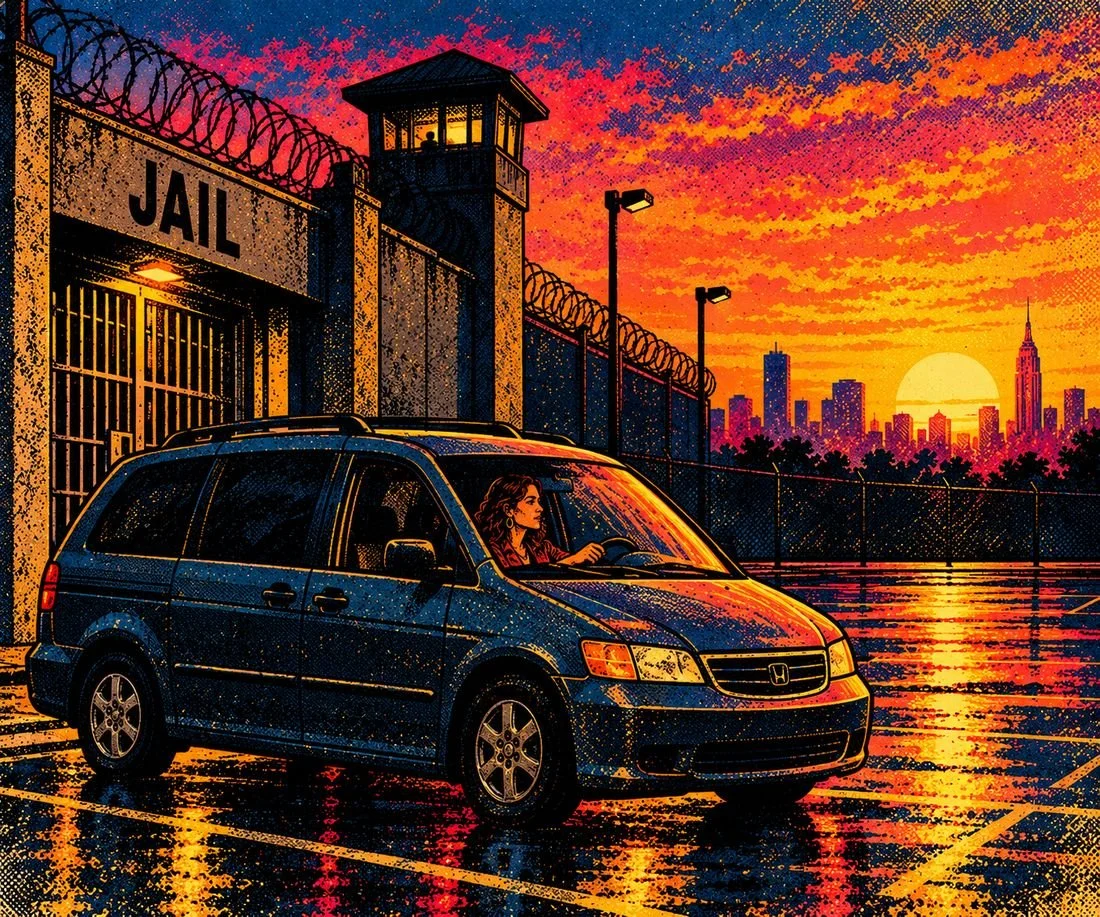
But who is to say who belongs in such august company as Spartacus, and who could claim a higher degree of bravery than Gabriel, marching through the corridor behind the guard, gripping his Ziploc of belongings, gazing out into the distance of the parking lot for Sofia at the wheel of their Caravan? He would tell his story to the one person he really owed it to, and maybe there was an elegant centripetal force to this whole thing, that when we propel ourselves out into the farthest reaches, we end up home.